
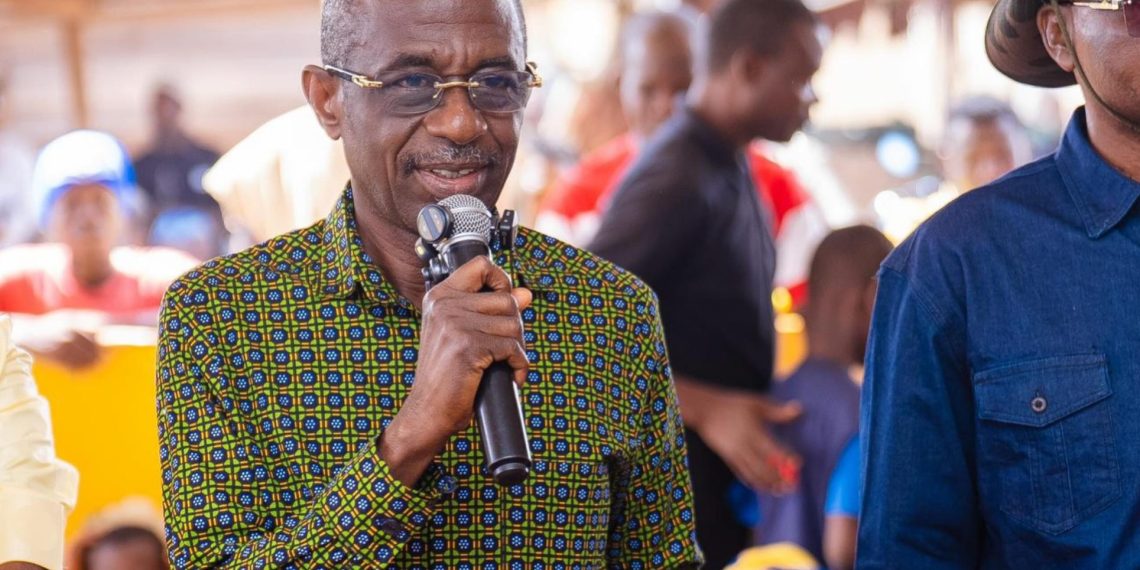
National Chairman of the governing National Democratic Congress (NDC), Johnson Asiedu Nketia, has said the Mahama administration should expect sustained scrutiny from the media and the public over its policies, expenditure and development commitments.
He said ministers must be prepared to answer legitimate questions, while government promises should be measured against what is ultimately delivered to citizens.
Mr Asiedu Nketia made the remarks at the fourth Bono Regional Ghana Journalists Association (GJA) Awards in Sunyani on September 19, 2026, on the theme: “Ethics, Integrity and Impactful Journalism – Essential Ingredients for Societal Transformation.”
“I say this as National Chairman of the governing National Democratic Congress: this government should expect scrutiny. Ministers should answer legitimate questions. Public expenditure should be examined. The promises we made to Ghanaians should be checked against what we deliver,” he said.
He said scrutiny should be regarded as an essential part of democratic governance rather than an attack on the government.
“That is part of governing in a democracy, and a government that intends to perform should have no difficulty with it,” he said.
Mr Asiedu Nketia urged journalists to report government achievements and shortcomings based on verified facts, irrespective of which political party benefited from the coverage.
“The public should also receive an accurate account when work is being done well. Journalism serves the citizen best when the facts are established properly and reported without regard to which political party finds them convenient,” he said.
He also challenged journalists in the Bono Region to monitor government projects beyond their commissioning and establish whether public investments are delivering value for money.
“There are billions of cedis of public investments underway in Bono today. I would encourage journalists in this region to keep the records,” he said.
He urged journalists to track the cost and terms of contracts, the contractors responsible and deadlines for completion, and to return to assess their progress.
“When the date arrives, go back. Find out whether the work was completed and whether the public received what it paid for,” he said.
Mr Asiedu Nketia said journalists should also investigate problems with projects and establish who was responsible, while reporting successful projects so the public is aware of the results.
“Five years from now, it should be possible for somebody to go into the archives of the media in Bono and reconstruct what happened to the major development commitments being made today,” he said.
He also urged politicians and public officials to provide journalists with the information needed for accurate reporting and to avoid treating difficult questions as hostility.
“Sometimes the person asking the uncomfortable question is telling you something that the people around you are no longer willing to say,” he said.
Mr Asiedu Nketia further called for improved working conditions for journalists, saying media institutions need adequate resources to retain competent professionals, conduct investigations and maintain strong regional newsrooms.
He said journalists should be able to build sustainable careers without becoming financially dependent on politicians, businesses or institutions they are expected to scrutinise.
“If we want high professional standards, the sustainability of serious journalism deserves attention as well,” he said.
The awards formed part of the Bono Regional GJA’s efforts to recognise outstanding journalism and were attended by journalists, traditional leaders, public officials and other stakeholders.