
The Government of Ghana has announced an ambitious economic strategy aimed at strengthening the country’s external financial resilience by building a reserve buffer equivalent to 15 months of import cover by 2028.
Dubbed the Ghana Accelerated National Reserve Accumulation Policy (GANRAP), the initiative seeks to move Ghana away from reliance on costly external borrowing to build reserves, and instead leverage the country’s gold resources as a key source of foreign exchange accumulation.
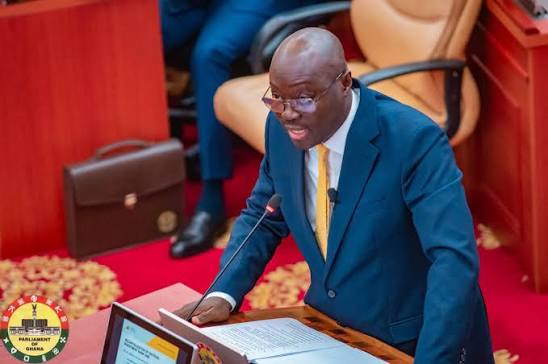
Presenting the policy to Parliament on Wednesday, Finance Minister Dr. Cassiel Ato Forson described the strategy as a major shift in economic management designed to safeguard Ghana against global financial shocks.
Under the policy, government plans to add an average of US$9.5 billion annually to the country’s gross international reserves. This will be supported by the purchase of about 3.02 tonnes of gold per week, sourced mainly from the artisanal and small-scale mining sector.
Additionally, government intends to invoke a state pre-emptive right to purchase 20% of gold output from large-scale mining companies operating in Ghana.
Dr. Forson described the initiative as the creation of an “economic war-chest” to help protect the economy from global volatility, maintain macroeconomic stability, and protect gains made under recent economic reforms.
He further argued that Ghana’s previous approach of using expensive currency swaps and Eurobond issuances to build reserves had become unsustainable due to high interest costs associated with external debt financing.
The policy sets a phased reserve accumulation target, projecting an increase from the current 5.7 months of import cover to 8.6 months by the end of 2026, 11.8 months by 2027, and finally reaching the 15-month target by 2028.