
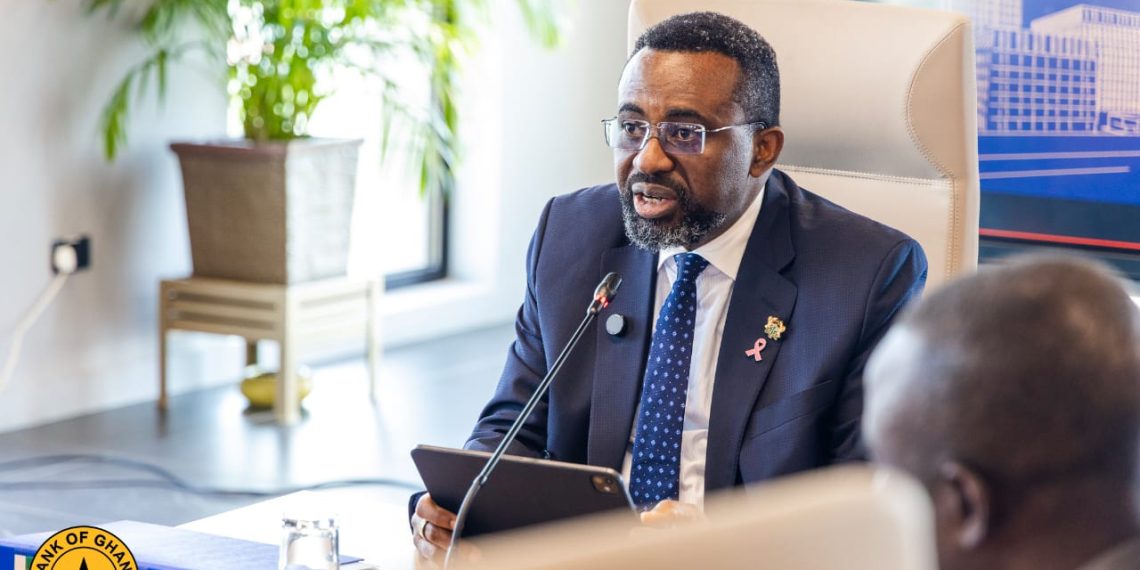
The International Monetary Fund (IMF) has disclosed that the Bank of Ghana’s Domestic Gold Purchase Programme (DGPP) generated losses of more than $1.7 billion in 2025 despite playing a central role in rebuilding the country’s foreign exchange reserves and supporting the Cedi.
In the 2026 Article IV Consultation and proposed Policy Coordination Instrument (PCI) report, the Fund stated that the programme had become the dominant source of the central bank’s foreign exchange inflows and reserves accumulation.
According to the report, the significant expansion of the DGPP led to losses of more than $1.7 billion, equivalent to 1.5% of Ghana’s gross domestic product, with almost all of the losses linked to the purchase of doré gold under the Gold for Reserves initiative.
“The significant scaling up of DGPP operations led to losses of over $1.7 billion (1.5% of GDP), almost entirely related to G4R doré purchases; this amounted to a loss of 17% of the value of doré gold sold by the BoG,” the IMF said.
The Fund attributed the losses to a combination of service and assay fees paid to GoldBod, discounts on gold sold to off-takers, and exchange-rate losses arising from the difference between the forex bureau rate used to purchase gold and the Cedi reference rate used for the Bank of Ghana’s accounting.
It also noted that while part of the losses reflected accounting valuation effects rather than direct economic costs, they nonetheless weakened the central bank’s balance sheet and resulted in transfers to recipients of foreign exchange sold at the reference rate.
The IMF said the losses did not include the cost of sterilising the reserves accumulated through the programme and noted that the Bank of Ghana’s negative equity stood at 6.7% of GDP at the end of 2025.
Despite the financial cost, the Fund said the programme had been instrumental in strengthening Ghana’s external position.
It said gold-related inflows rose sharply from $1.7 billion in 2023 to $12.7 billion in 2025, including $1.1 billion in net gains from bullion sales, largely driven by increased purchases from the artisanal and small-scale mining sector.
The IMF added that the DGPP had been “operationally central” to the eightfold increase in Ghana’s gross international reserves since the start of the Extended Credit Facility-supported programme, with reserves reaching $11.9 billion by the end of 2025, equivalent to about four months of import cover and significantly exceeding programme targets.
The stronger reserve position enabled the Bank of Ghana to scale up foreign exchange sales from $1 billion in 2023 to $10.6 billion in 2025, improving market liquidity and coinciding with a 41% nominal appreciation of the Cedi against the US dollar, the report said.