
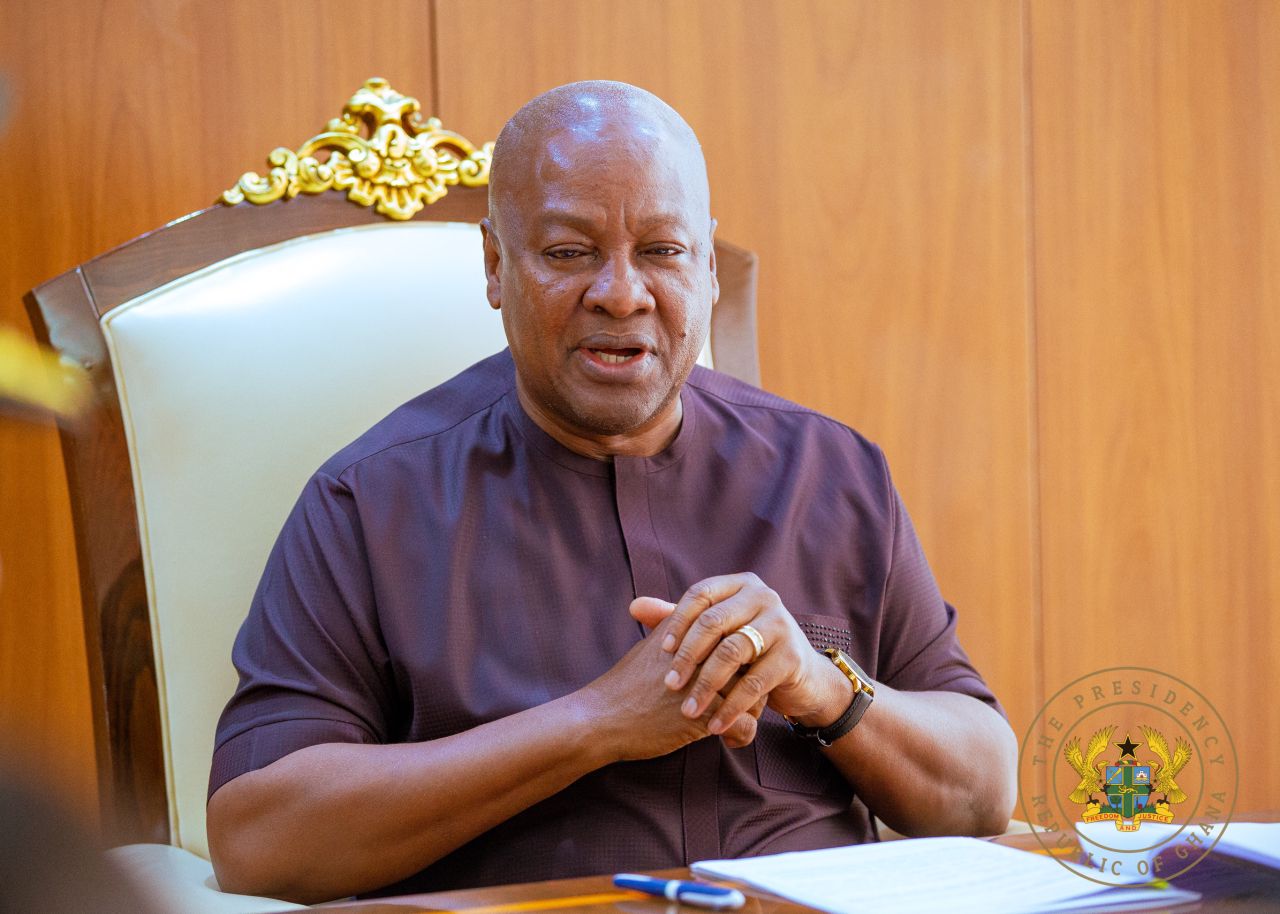
President John Dramani Mahama has been honoured with the International Statesperson Award by the World Affairs Council of Philadelphia, using the occasion to reflect on the meaning, responsibilities, and expectations of statesmanship in Africa and beyond.
Delivering his acceptance remarks, President Mahama said the recognition prompted him to reflect on the true essence of being a statesperson.
“When I learned that I would be the recipient of this International Statesperson Award, it made me wonder: what exactly does it mean to be a statesperson? What are the challenges? What are the expectations?” he said.
He noted that interpretations of leadership and statesmanship vary widely, but stressed that for him, the concept is closely tied to Africa’s historical struggle for sovereignty, justice, and self-determination.
According to him, African statesmanship has long been defined by the defence of territorial integrity and the prioritisation of citizens in the management of national resources.
“Being an African statesperson has meant, and still continues to mean, fighting for and protecting the sovereignty of the land and the freedom of your people,” he said. “Ensuring that the peoples of that land are the primary beneficiaries of its resources.”
President Mahama also reflected on the legacy of global and African icons, particularly former South African President Nelson Mandela, noting the global debates that followed Mandela’s emergence as a leader after his release from prison in 1990.
He said Mandela’s transformation from political prisoner to global statesman reshaped international perceptions of leadership and renewed hope for Africa.
Mahama further highlighted the sacrifices of Africa’s founding leaders, including Ghana’s first President Dr. Kwame Nkrumah, Julius Nyerere of Tanzania, Kenneth Kaunda of Zambia, Seretse Khama of Botswana, Gamal Abdel Nasser of Egypt, and Jomo Kenyatta of Kenya.
“History has shown that many African statesmen—those who fought for our progress—did not live to see the full fruits of their struggle,” he noted.
He added that their legacy continues to inspire contemporary leadership and reinforces the responsibility of present-day leaders to safeguard freedom and promote development for future generations.
“What we fight for is the freedom of our future generations,” he said. “What fuels our vision and our actions is the boundless love we have for our people and our continent.”
President Mahama expressed gratitude to the World Affairs Council of Philadelphia for the honour and thanked Ghanaians for their continued trust and support.
“I am grateful to the World Affairs Council of Philadelphia for this recognition, and I am grateful to the good people of Ghana for the faith they have placed in me,” he said, closing with the phrase: “Aluta Continua.”