President John Dramani Mahama has reaffirmed Ghana’s commitment to strengthening specialist healthcare delivery across West Africa, while pledging government support for surgical training and infrastructure development.
Speaking at the 66th Annual Conference of the West African College of Surgeons (WACS) held in Accra, President Mahama underscored the critical role of surgeons in safeguarding public health, describing their work as inseparable from national development and human dignity.
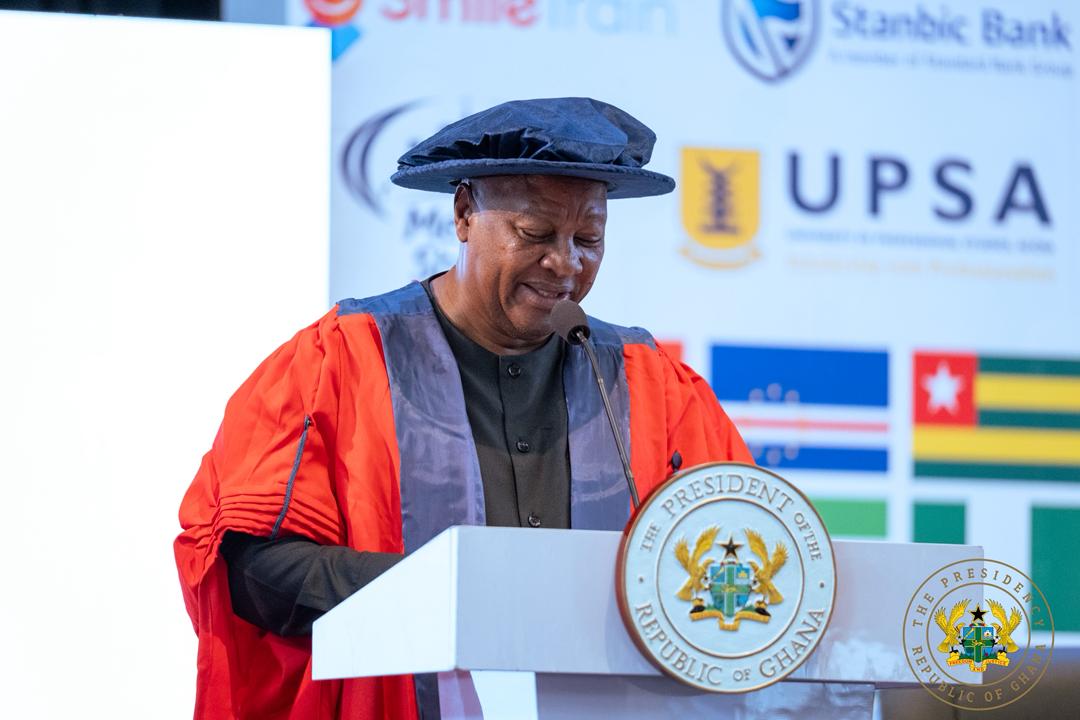
“It is a great honor and privilege for me to join you at the opening ceremony of the West African College of Surgeons 66th Annual Conference,” President Mahama stated. “On behalf of the people and government of Ghana, I warmly welcome all delegates from across West Africa, the wider African continent, and from other parts of the world.”
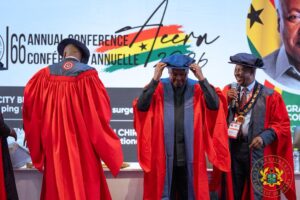
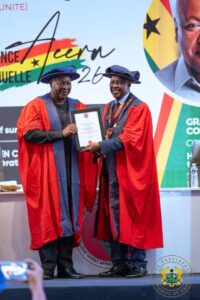
The President expressed appreciation to the College for conferring on him the title of Grand Patron of the conference and admitting him as an Honorary Fellow. He said the recognition strengthened his resolve to support the institution’s mission.
“I accept these recognitions on behalf of all the people of Ghana, with humility and renewed commitment to support the work of the College, because the work of surgeons is inseparable from the health, dignity and productivity of our people,” he said.
President Mahama praised the West African College of Surgeons for its contribution to regional cooperation and specialist training, noting that the institution has trained a significant number of surgeons serving across West Africa. He also paid tribute to pioneering figures whose contributions shaped surgical education and practice in the sub-region.
Touching on the conference theme, Capacity Building in Surgery, President Mahama stressed that improving surgical care goes beyond increasing the number of surgeons. He emphasized the need to strengthen the entire healthcare support system.
“Capacity building must be understood comprehensively. It is not only about producing more surgeons. It is equally about strengthening the teams and the systems that support safe surgery, including anesthesia, nursing, diagnostics, blood services, sterile supply chains, critical care and reliable referral pathways,” he explained.
The President further assured participants that government would review recommendations from the conference and collaborate with stakeholders to implement reforms aimed at strengthening health systems.
“We will carefully study the recommendations coming out of this conference and work with stakeholders to implement those that require immediate action, while developing structured pathways for longer-term reforms,” he noted.
President Mahama also acknowledged fiscal constraints facing health systems across the sub-region but called for innovative and sustainable financing models, including responsible private sector participation to improve service delivery while maintaining affordability and equity.
Addressing gender inclusion in surgical training and leadership, he encouraged deliberate measures to increase female participation in the field.
“Gender equity in surgical training and leadership is not only a matter of fairness but also a practical necessity for stronger, more resilient health systems,” he said.
On innovation, the President commended the College’s adoption of digital technology, artificial intelligence, and modern training tools, describing them as critical to improving clinical outcomes and strengthening medical education.
He also raised concerns about the increasing migration of skilled health professionals from the region, urging policies that improve working conditions and professional recognition to retain healthcare workers.
“Our response must be deliberate and practical — improving working conditions, strengthening career pathways, enhancing professional recognition, and creating environments in which health workers can thrive and choose to serve,” he stated.
President Mahama highlighted Ghana’s implementation of the Ghana Medical Trust Fund as part of efforts to address non-communicable diseases while strengthening specialist training.
“Crucially, the fund is also structured to strengthen the supply of specialist care. A defined portion of the resources in this fund is allocated to training specialist doctors,” he explained.
He stressed that timely access to surgical care remains vital in reducing preventable deaths and disabilities across the region.
“In surgical care, timely access is critical. When access is delayed, preventable disability rises and avoidable deaths occur, and families endure needless suffering,” he added.
President Mahama concluded by commending the West African College of Surgeons for its commitment to excellence and urged participants to develop solutions that can improve healthcare equity across the sub-region.
“It is my singular honor to declare the 66th Annual Conference of the West African College of Surgeons officially open,” he declared.
The conference brought together surgeons, medical professionals, policymakers, and health institutions from across Africa and beyond to discuss strategies to improve surgical care delivery and specialist training in the region.